About M Media Audio
Austin, TX. Est. 1994. Plugin developers. Audio engineers. Same team.
Built in the studio, not in a marketing meeting.
M Media Audio builds original audio plugins in Austin, Texas. Every product is written in native C++ and developed in the same studio where we record, mix, master, and listen. Production work may no longer fill every day, but it remains the proving ground: if a feature does not solve a real problem or make a meaningful difference to the sound, it does not ship.
All sixteen plugins were built here and evaluated against a reference library of more than 10,000 commercial masters. We are not recreating vintage hardware, borrowing famous faceplates, or selling nostalgia with new knobs. Each plugin begins with a musical objective - more impact, better control, greater depth, cleaner balance - and is refined across real sources until it earns its place in the signal chain.
That judgment comes from decades behind the console. It began at Westwood One Radio in the late 1980s, where broadcast standards and unforgiving deadlines left no room for “close enough.” During the 1990s, it moved into live front-of-house at Austin venues including Liberty Lunch, Steamboat, Cannibal Club, and 5th Street Live - mixing hundreds of national acts and multi-venue SXSW runs. Since 2000, that experience has continued through more than 170 recording, mixing, mastering, and production projects.
The technology is modern. The standard is simple: make the source sound better, make the controls useful, and leave out everything that gets in the way.
Built to make a solid source noticeably better.
Every plugin started with something that already sounded good, and the question of how to make it better. Not a feature request. Not a gap in the market. Something we kept reaching for, then built properly.
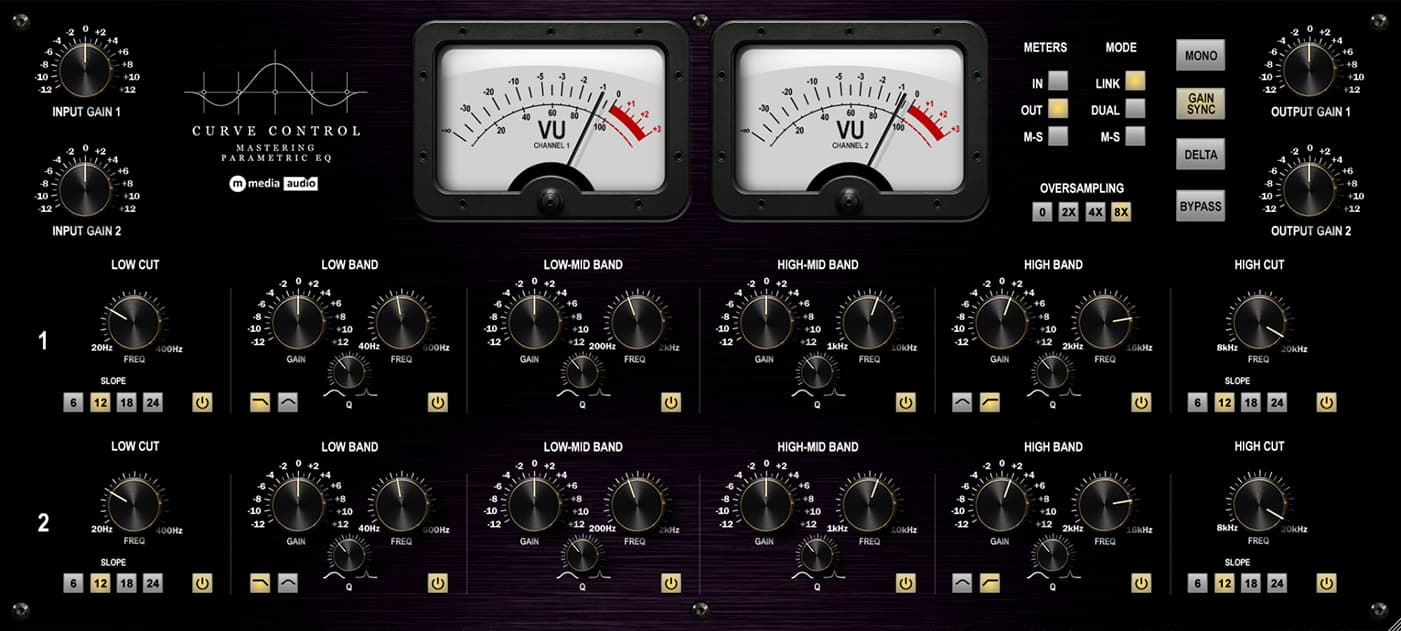
Curve Control
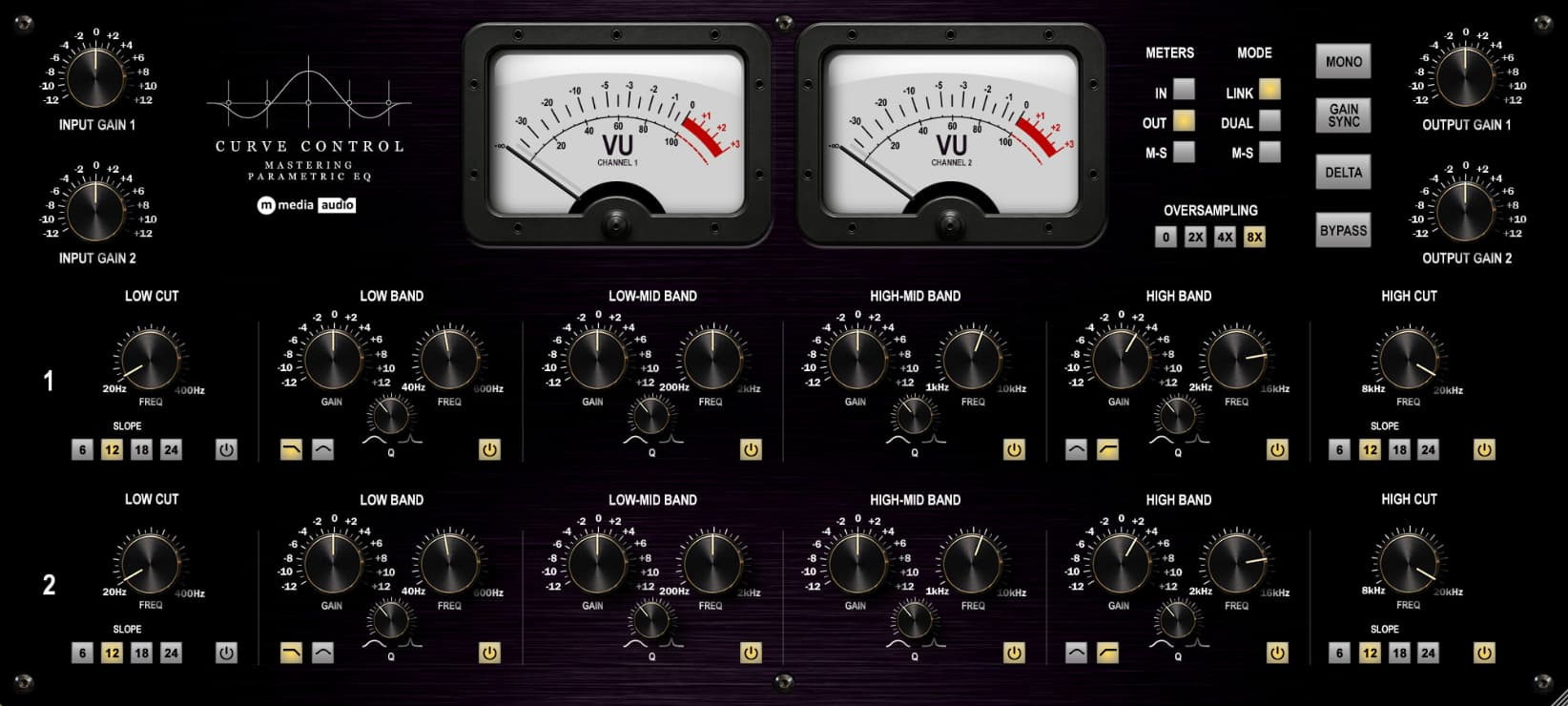
Most EQ decisions get made blind - you boost, it sounds louder, you assume it's better. We wanted an EQ that couldn't lie to us. Twelve fully parametric bands across two channels, three modes (Link, Dual L/R, M/S), always-on level-dependent saturation for hardware weight, and real monitoring tools: Delta isolates exactly what a band is adding, Gain Sync keeps loudness honest while you shape tone. A mix and mastering EQ built around not fooling yourself.
Learn more →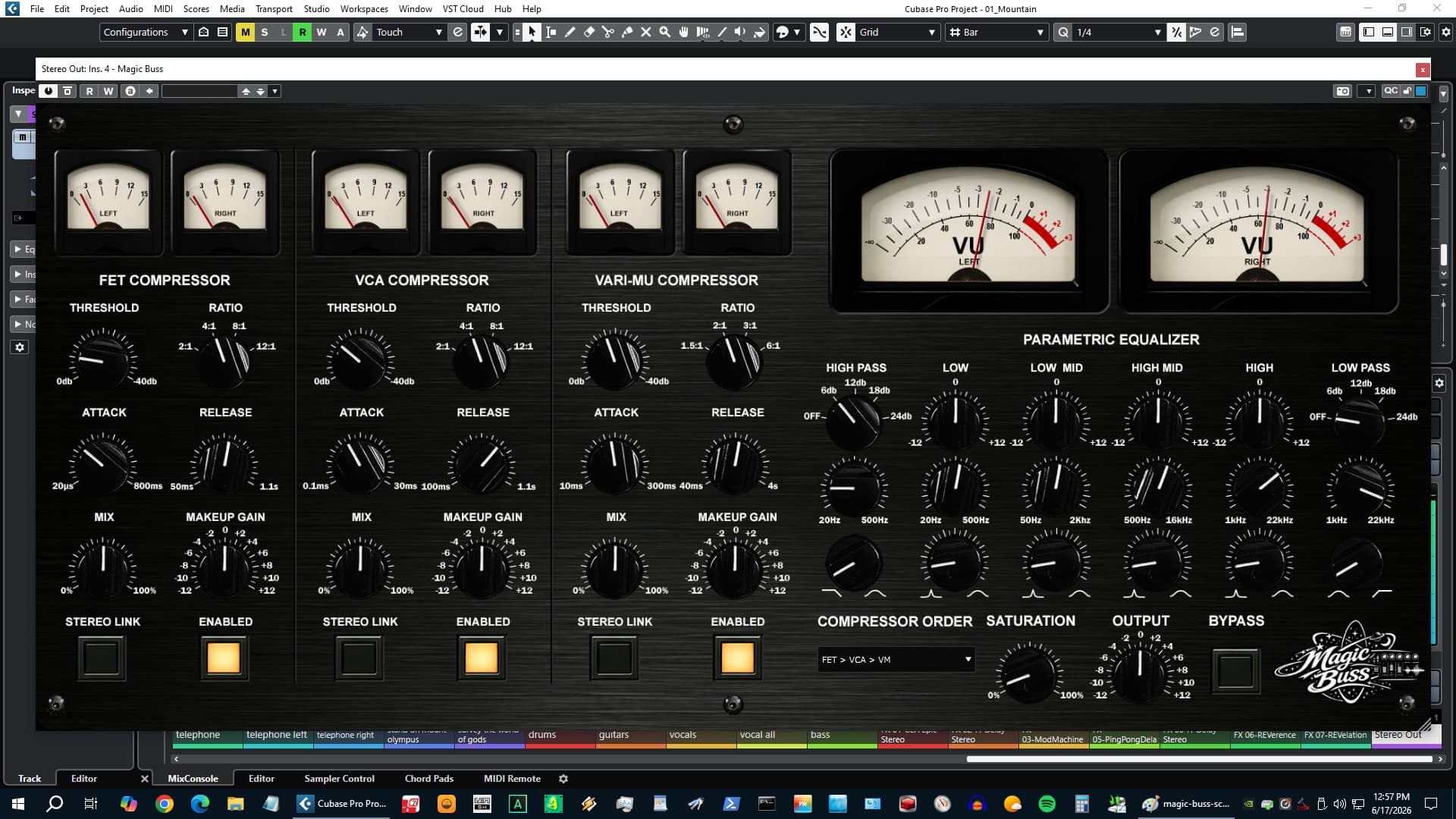
Magic Buss
FET, VCA, and Vari-Mu compression each impart a different character, and every mix bus wants a different one - sometimes more than one. Instead of picking a single topology, Magic Buss runs all three in series, each with its own parallel blend knob, and an Order switch that lets any of them go first and change how the others respond. A six-band EQ and saturation stage close out the chain. Three compressors, one insert, your call on the order.
Learn more →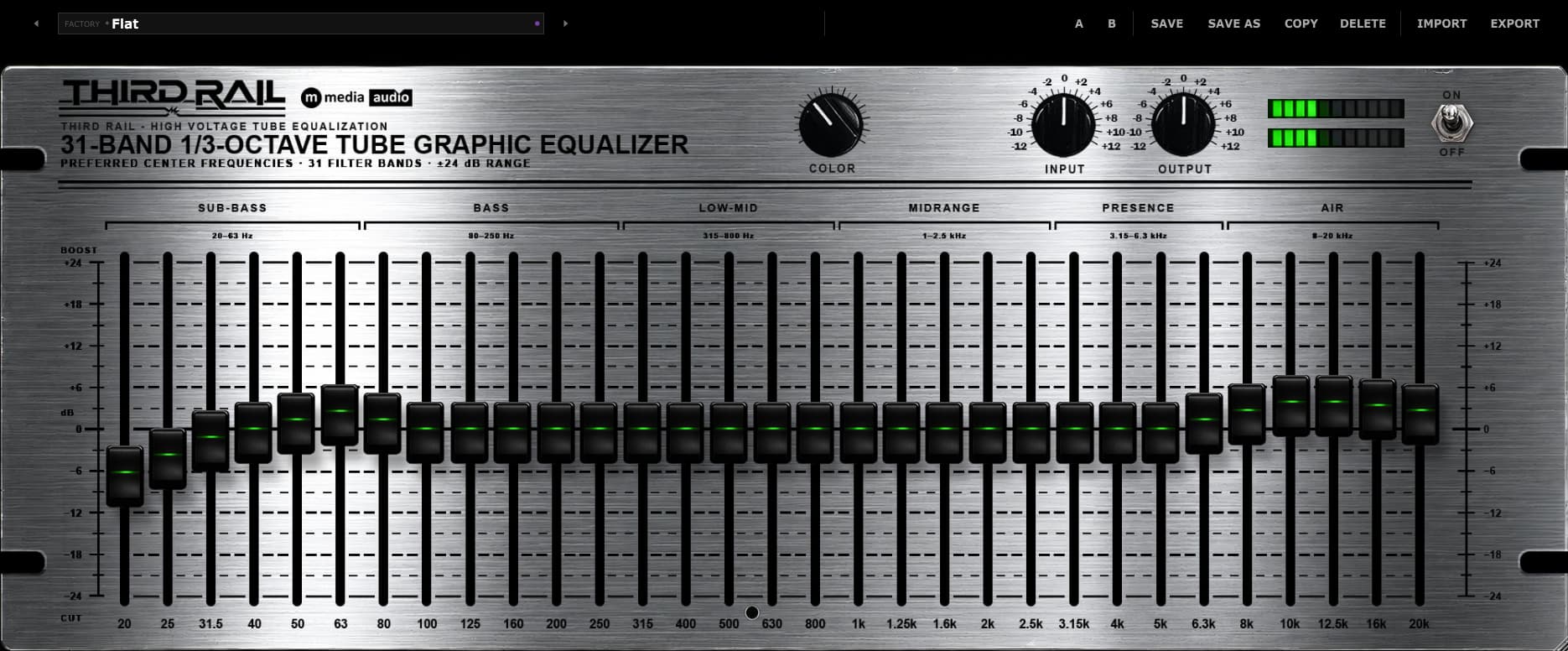
Third Rail
Tube EQs and graphic EQs went two separate directions in real hardware - running 31 individual tube stages in one box was a heat, cost, and reliability nightmare with the technology of that era, so nobody built one. We figured we could still do it. Third Rail is a real 31-band 1/3-octave graphic EQ, ±24 dB per band, with input-driven tube saturation that kicks in the harder you push it. A COLOR knob recolors the whole plugin live, just because it's going to be open for hours at a time.
Learn more →Native C++ DSP. No shortcuts.
All sixteen plugins are built in native C++, shipped as VST3, 64-bit. No interpreted layers, no scripted wrappers, no middleware between the math and the audio.
The DSP decisions were made by ear in a studio with a 10,000+ track reference library, then implemented in code. Most plugin development goes the other direction: implement first, listen second. We had the listening infrastructure first. The code came after we knew exactly what the output should sound like.
Activation is handled through a license server we built ourselves. Three simultaneous activations per license. No telemetry. Nothing phoning home during a session. The architecture is the same principle as our enterprise software products: the customer's data and workflow stay on their machine.
DSP and software stack
- C++ - native DSP, all sixteen plugins
- CMake - cross-platform build system
- VST3 + AU - 64-bit, Windows 10/11, macOS 11+, Linux
- Custom license server, built in-house
General software capability
- Python, Go, TypeScript, PHP, Java
- Angular v4-16, REST APIs, microservices
- AI and LLM integration - OpenAI, Claude, Ollama
- Docker, CI/CD, Linux server administration
- PostgreSQL, MySQL, Redis, MongoDB
- Certified ScrumMaster (CSM) - Scrum Alliance
- US federal vendor - UEI: M8H4W9L8K8P4
The studio - where the plugins were built and calibrated.
The plugins were not built in a test environment. They were built in a working mastering studio with a real analog signal chain and five reference monitoring systems. Every threshold, every band boundary, every Character mode response in all three plugins was tuned in this room against real program material.
The room runs a vintage Soundcraft analog console with Burr-Brown electronics - a hybrid chain that handles analog character work at the front end, with RME 24-channel conversion handling the digital side. Outboard dynamics and EQ: SSL, Empirical Labs Distressors, DBX, Valley People, Symetrix. The same chain most plugin emulations are trying to replicate. We have the original equipment, which means we know exactly what the emulation should sound like and when it is wrong.
The reference library is 10,000+ commercial masters across every genre: pop, hip-hop, metal, country, jazz, electronic, classical, broadcast. When Alternate Timeline's 1970s preset was being calibrated, the reference was not one 1970s album - it was dozens. The era presets reflect real spectral and dynamic behavior from that period, not a marketing description of what someone thought that era sounded like.
In parallel: Pro Tools and Cubase Pro as primary DAWs. Waves full suite, Slate Digital, IK Multimedia, iZotope RX, Ozone, T-RackS. Whisper AI for spoken-word transcript workflows. Python automation for batch processing and delivery. Services work and plugin development share the same room and the same reference infrastructure.
30+ years of sessions is what the plugins are calibrated against.
The plugin calibration is not based on a theory of what good audio sounds like. It is based on what good audio actually sounds like across 30+ years and tens of thousands of hours of real sessions. That is not something you can shortcut.
Westwood One Radio Network in the late 1980s: broadcast-standard audio editing for national syndication. Deadline pressure with no margin for error - the feed goes out in spec or it does not go out at all. Through the 1990s, live front-of-house at Austin's primary venues: Liberty Lunch, Steamboat, Cannibal Club, Mercado Caribe, 5th Street Live, Jelly Club. Hundreds of national and regional touring acts. Grandmaster Flash, Spin Doctors, Bob Schneider, Cadillac Tramps. SXSW showcase runs across multiple venues simultaneously.
M Media Audio opened in 2000. 170+ projects since then: studio albums, singles, podcasts, corporate media, digital campaigns, broadcast audio. 42 mastered tracks released across streaming platforms for Suprablaster, Jeff Michaels, and Black Steelies. The reference library was built track by track across all of it.
Career timeline
- Westwood One Radio Network - late 1980s broadcast engineering
- Austin live FOH - 1990s-2000s, hundreds of national acts
- SXSW multi-venue audio production
- M Media Audio - 2000-present, 170+ projects
- 42 mastered tracks released on streaming platforms
- Curve Control, Magic Buss, Sugar Engine, Third Rail, and twelve more - sixteen plugins shipped in 2026
Audio production services
- Mastering - $95/track, streaming and vinyl
- Mixing - $350/song, full chain
- Podcast production - raw to RSS-ready
- Audio editing and restoration
- Vinyl transfer and DDP prep
- Audio for video - mix to picture
- Batch and agency delivery
No subscription. Ever.
Every plugin ships with a perpetual license. One purchase, permanent ownership. No renewal dates, no cloud dependency, no monthly fee waiting in the background. Three simultaneous activations per license - studio desktop, laptop, backup machine. Need to move a license? Email us and we handle it same day.
This is a deliberate architecture decision, not a pricing strategy. The activation server is controlled by us. The license validation happens at activation time, not at session time. If the server goes down, your plugin still runs. If we close up shop, the license still works. This is how professional tools should be sold.
Perpetual License
Pay once. Yours forever.
3 Activations
Studio, laptop, and backup.
No Telemetry
Nothing phoning home mid-session.
Direct Support
A human responds. One business day.
Hi. I'm Jeff Mutschler, founder of M Media Audio.
Austin, TX. In professional audio since 1988. I started at Westwood One Radio Networks in Los Angeles doing tape transfers of the King Biscuit Flower Hour - broadcast-standard work, no margin for error, feed goes out in spec or it does not go out. From there it moved to studio work as a musician, then mixing, then front-of-house at Austin venues through the 1990s: Liberty Lunch, Steamboat, Cannibal Club, SXSW runs across multiple stages. We started a family and a hobby of writing code turned into a real career. The audio work stayed active on the side through a lot of years and a lot of Austin bands.
A long software engineering career followed. When it was time to move on, I started writing plugins seriously. The first ones shipped in 2026 - so much more headed your way, stuff that hasn't been done yet.
Plugins or sessions - both are real work.
Pick a plugin, buy it, and it is yours. Or start a project and we will handle the audio engineering end to end.