Speaker Breaker: Automatic Low-End Correction for Mixes That Need to Survive Real Speakers
The low end is where confident mixes go to get humbled. In the studio, everything can feel perfect. The monitors are honest, the room is behaving, the kick has authority, the bass feels wide and expensive, and the whole track seems to sit exactly where it should. Then the same mix lands on a car stereo, a phone, a Bluetooth speaker, a club system, a laptop, or a set of earbuds that cost less than lunch, and suddenly the truth arrives wearing steel-toed boots.
The sub is too much. The kick eats the bass. The bass eats the vocal. The upper bass turns into furniture. The low mids bloom into cardboard. What felt powerful in the room becomes heavy, cloudy, and impossible to trust.
Speaker Breaker was built for that problem.
It is a dynamic low-end correction processor designed to watch everything below 500 Hz and gently reduce buildup when the mix crosses practical translation targets. It does not try to remix the track. It does not chase a reference song. It does not use AI. It simply analyzes the low-frequency range, compares the energy against researched targets, and applies transparent correction where the mix is starting to overload.
The plugin watches five low-end zones: sub around 40 Hz, kick weight around 90 Hz, low bass around 160 Hz, upper bass around 250 Hz, and low-mid boxiness around 400 Hz. Those are the places where mixes most often lie to us. A studio can make 40 Hz feel magnificent when the listener’s actual playback system will turn it into a confused shrug. A tight room can make 250 Hz feel warm when the outside world hears mud. A big monitor system can make low-mid buildup feel impressive right up until the song leaves the building.
Speaker Breaker treats those zones as translation risks. It analyzes them with RMS-style behavior, computes gain reduction per band, smooths the correction so it does not pump, and blends the corrected signal back with the original. Everything above 500 Hz passes through untouched. This is not a full-spectrum mastering processor trying to become your new best friend. It has one job: keep the bottom end from wrecking the mix.
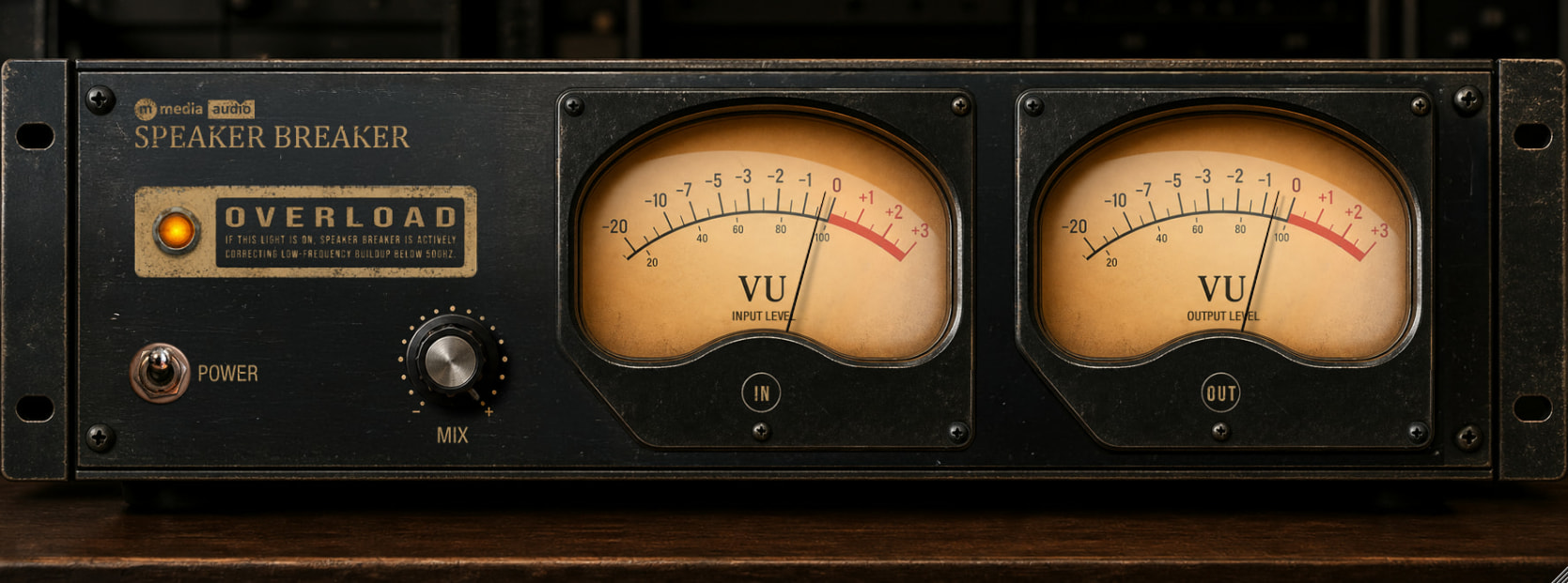
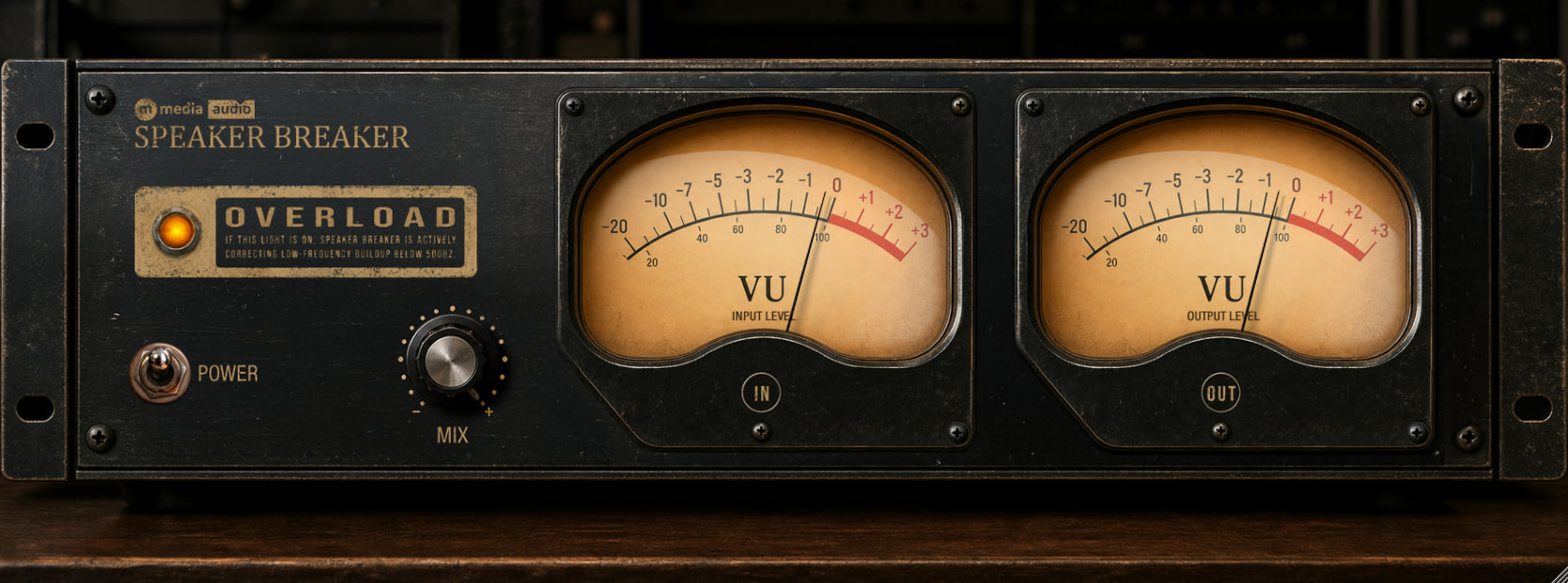
The workflow is intentionally simple. Drop it on a mix bus, drum bus, bass bus, or 2-bus. Start with the Mix knob at midnight. Listen. The knob blends the corrected signal with the dry signal, so you decide how much of the correction you want. Full left is dry. Full right is the full correction path. The default setting is calibrated as a practical starting point for most material.
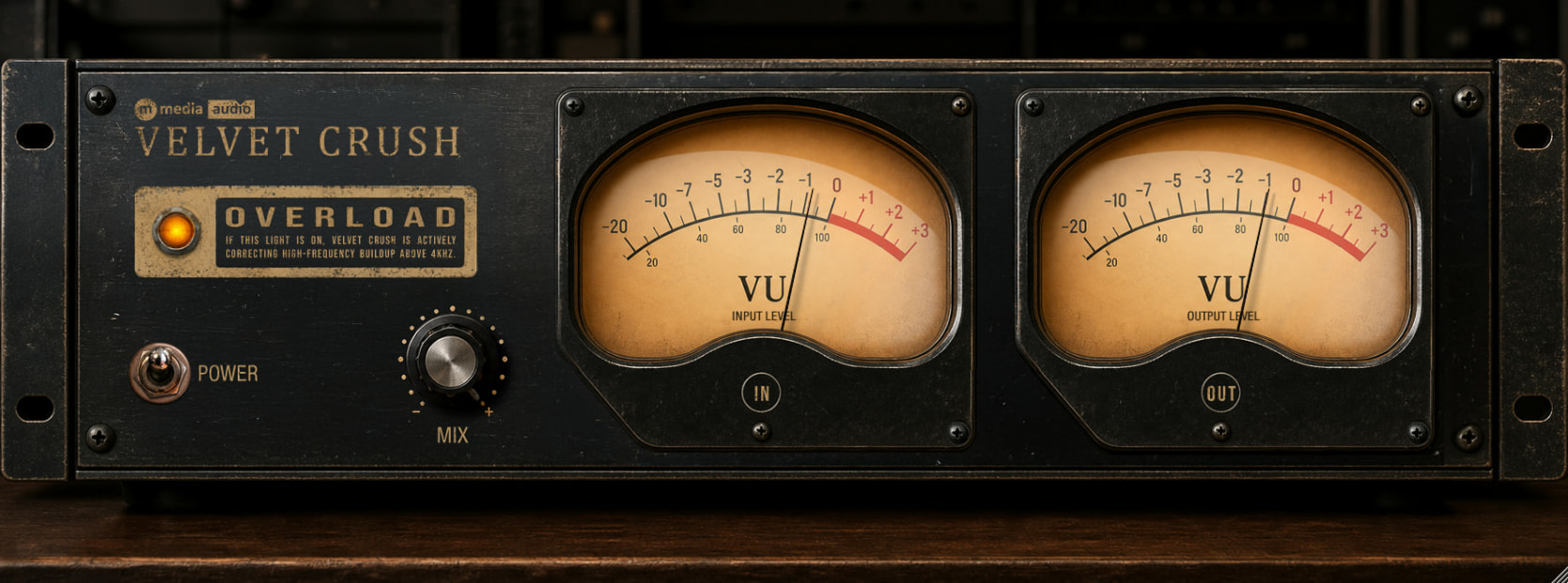
The faceplate tells you what is happening without asking you to become a spreadsheet with ears. The input and output VU meters show energy before and after correction. When the input meter is pushing harder than the output meter, Speaker Breaker is doing work. The overload pilot light tells you when any low-end band is actively being reduced. Dark means the low end is under control. Lit means the plugin found a buildup and is managing it.
That matters because low-end problems are often hard to identify while you are inside a mix. Engineers can spend hours nudging bass levels, carving kick drums, second-guessing monitors, and arguing with a room mode that has no intention of becoming reasonable. Speaker Breaker gives you a direct answer: there is too much energy in the low range, and the processor is correcting it. The correction is designed to be gentle. This is not a bass remover. It does not flatten the bottom end into a polite apology. Good low end should still feel powerful. A kick should still move. A bass line should still have authority. The goal is not less bass. The goal is bass that translates.
That distinction is the entire product.
Bad low end makes a mix feel bigger in one room and worse everywhere else. Good low end survives the trip. It holds together when the playback system changes. It does not disappear on small speakers or explode on large ones. It supports the song instead of becoming the song’s landlord. Speaker Breaker is built around established listening and mastering principles, including equal-loudness behavior, preferred target-response research, and practical low-frequency energy management. The listener does not need to know any of that. The engineer only needs to hear that the mix stops fighting itself.
Use Speaker Breaker when the kick and bass feel great but you do not fully trust them. Use it when a mix sounds huge in the studio but questionable everywhere else. Use it when the low mids are crowding the vocal, the sub is impressive for the wrong reasons, or the bass region keeps changing character from speaker to speaker.
Speaker Breaker is a Windows VST3 plugin built for stereo and mono material, with zero latency and support for common production sample rates. It is a practical utility for real mix translation. Not glamorous. Not mysterious. Not pretending to be a mastering engineer in a trench coat.
It just keeps your low end from breaking the speaker, the mix, and eventually your will to continue.