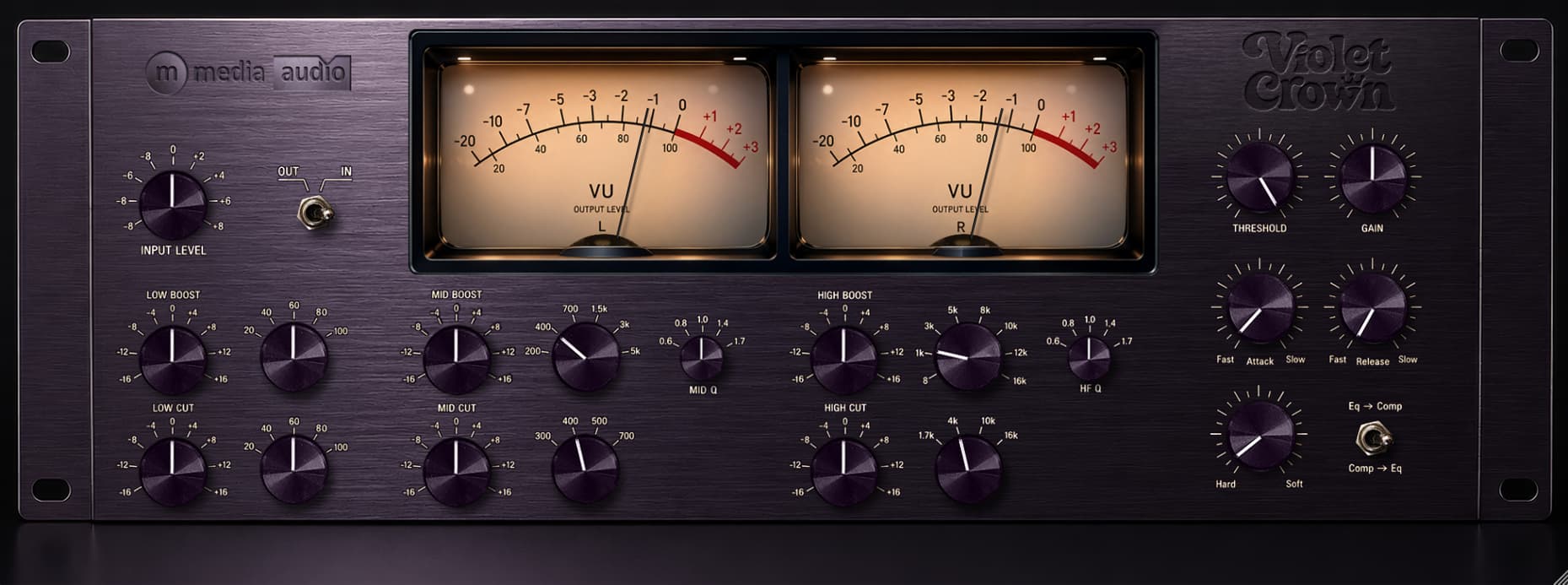
A finished stereo mix has several relationships happening at once. Left and right establish its balance. The center carries much of its focus. The differences between the channels create much of its spread. Compression can shape all of those relationships, but working on one view at a time can make the process unnecessarily fragmented.
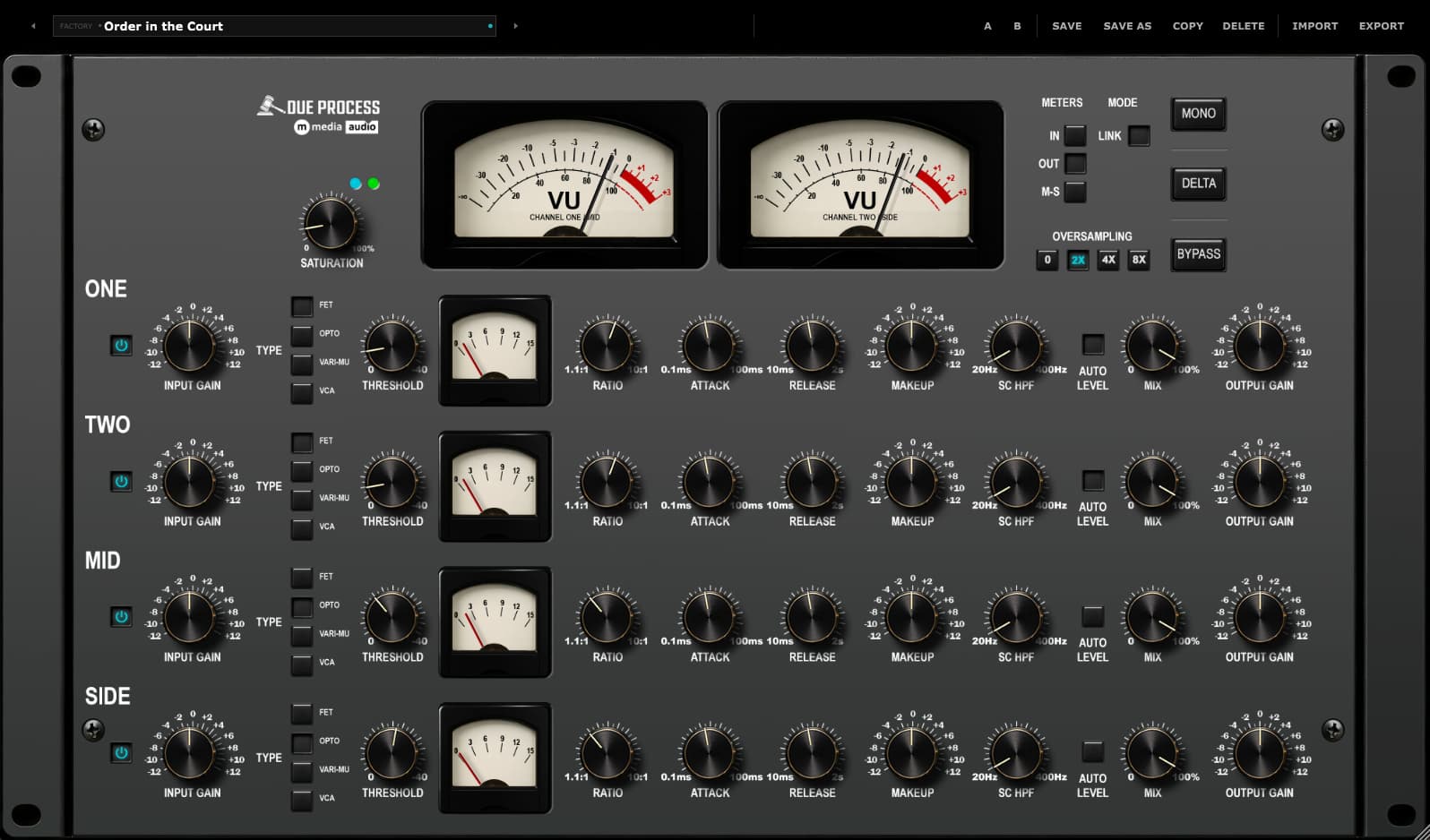
Due Process puts four complete compressor rows in one window: Channel 1, Channel 2, Mid and Side. They work in a defined sequence, giving you left/right control followed by mid/side control in a single pass.
Understand What Reaches Each Row
Channel 1 processes the left channel; Channel 2 processes the right. Their outputs are then encoded into Mid and Side. The Mid and Side compressors process those components before the signal is decoded back to stereo.
That order matters. The Mid compressor hears the result of the left/right stage, not an untouched copy of the original mix. A strong move upstream can change how much compression happens downstream.
Mid and Side are also not isolated instrument stems. Mid contains the sum information; Side contains the difference. A centered vocal often contributes strongly to Mid, but so do centered drums, bass and other instruments. Compressing Mid changes their shared relationship.
Give Each Stage a Musical Assignment
For a first experiment, Link Channel 1 and Channel 2. That ties their settings together and gives them a shared detector, a useful foundation for stable stereo bus compression. Choose a restrained ratio and lower Threshold until the loudest passages receive a little control.
Now bring in Mid. Perhaps the center should feel denser without making the room sound more contained. Try VCA for precise control or Vari-Mu for a gradually firmer response. Begin gently and listen to the kick, vocal and snare together.
Then adjust Side independently. An Opto response can give the ambience a different recovery from the center. Listen across transitions: does the chorus open naturally, and do the sides return comfortably between phrases?
Each row offers Input, Makeup, Mix and Output. Use Mix when you want some compressed density beneath the original envelope. Keep track of Output trims, because changing the Mid/Side balance also changes perceived width.
Make Four Decisions, Not Four Obligations
Auto-Level helps you compare each row at a consistent level. Delta lets you hear the difference the compression removes. Check Mono, then return to stereo and compare the full result with Bypass.
A useful approach is to switch rows off one at a time. If a row adds nothing you value, leave it off. Premium control includes the ability to exercise restraint. The court does not require a conviction on every channel.