The center of a record and the space around it do not always need the same tonal shape. You might want a little more vocal presence while keeping wide guitars relaxed, or a firmer low-end foundation without adding weight to the room microphones.
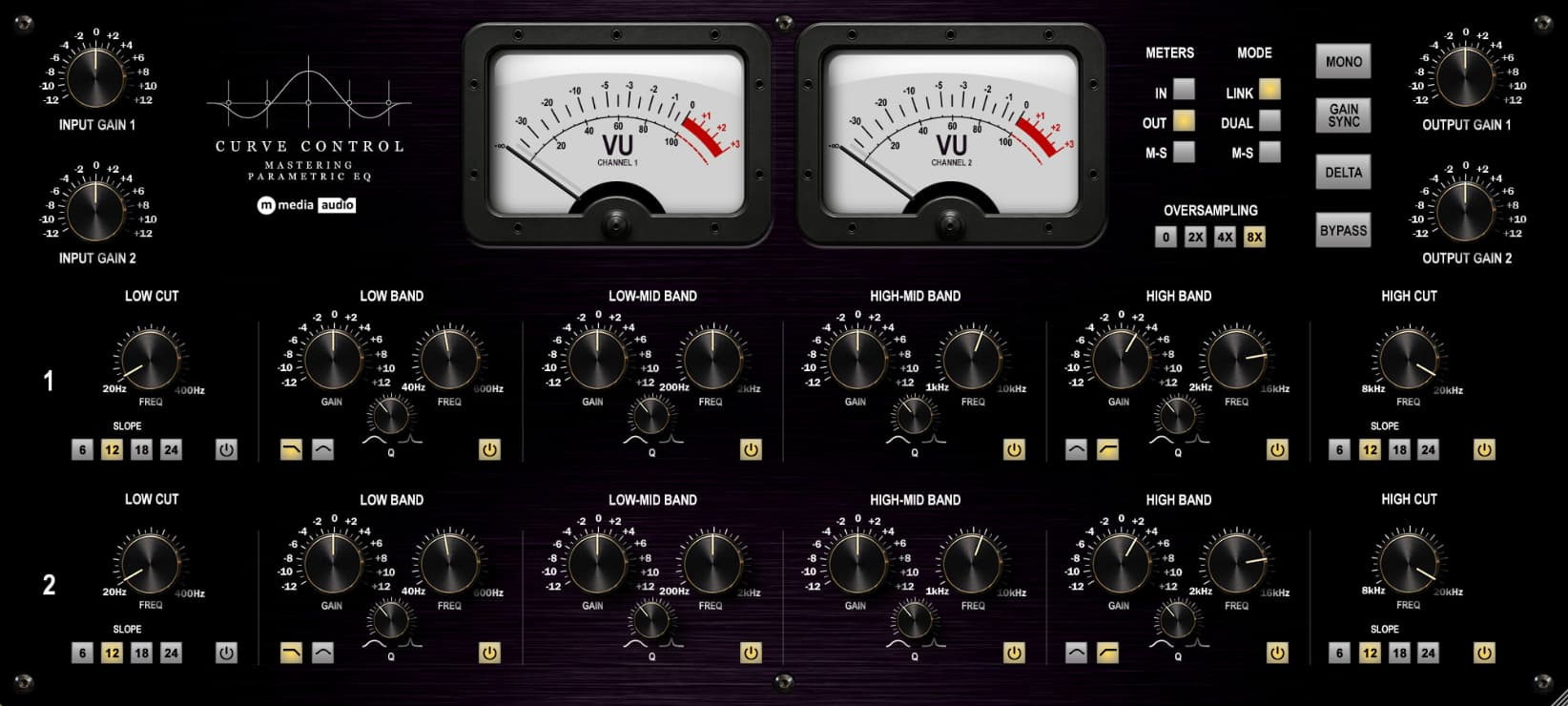
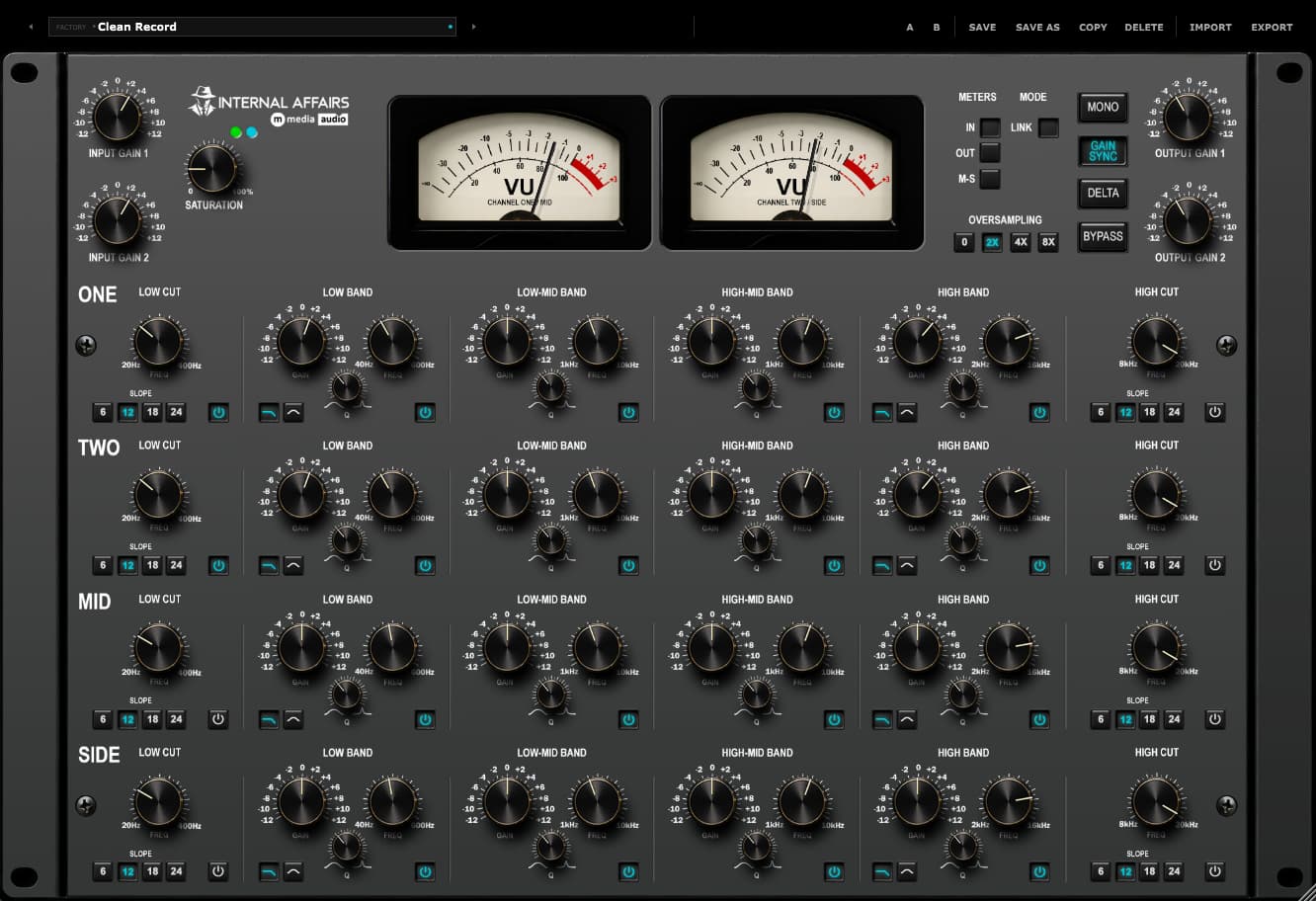
Mid/Side EQ lets you make those decisions within a stereo mix. Internal Affairs provides complete Mid and Side EQ rows alongside separate left and right rows, all working in one pass.
Know What You Are Shaping
Mid represents the sum of the left and right channels. Side represents their difference. This gives you another way to work on the image, but it does not turn the mix into separate vocal, bass and ambience tracks.
A presence boost on Mid can bring the vocal forward, but it can also bring forward a centered snare or guitar. A high shelf on Side can open the room and stereo effects while also lifting wide cymbals. The useful question is what the whole component contains at that frequency.
Start with Channel 1 and Channel 2 flat unless you have a reason to use them. Their processing happens before the Mid/Side rows, so keeping them neutral initially makes the exercise easier to understand.
Try One Small Move in the Center
Choose a broad bell in the Mid row and add a modest presence lift. Around half a decibel can be enough to hear a change on an already balanced master. Move the frequency while listening to the vocal and the instruments sharing its space.
If the mix becomes more articulate without turning insistent, keep exploring. If the snare starts demanding more attention than the singer, change the frequency, reduce the gain or abandon that move.
Internal Affairs has independent band power switches. Use them to compare a single adjustment without forgetting what the rest of the EQ is doing.
Give the Sides Their Own Shape
Try a small Side high-shelf lift for openness, or a broad reduction where the stereo arrangement feels crowded. Its low cut can reduce deep difference information when that genuinely helps the foundation. Raise it gradually; a preset cutoff cannot know where your arrangement keeps its useful bass.
Removing Side energy changes width at those frequencies. You are making an image decision as well as a tonal one.
Check the Record, Not Just the Component
Use Delta to inspect the processing difference, then judge the full mix at matched listening level. The In/Out/M-S meter selection helps you watch the components, while Mono reveals how the center translates when the differences cancel.
Gain Sync counter-trims Output against Input changes; it does not automatically compensate every EQ boost. Match the overall level separately when comparing curves.
The best result often sounds like the same record with its proportions more beautifully arranged. Nobody needs to notice your clever routing for it to have been worthwhile.