The right amount of drive is the amount that makes the musical intention clearer. That might be almost invisible body on a vocal, or unmistakable grit on a bass. A clean meter reading cannot decide it, and neither can a rule that says every preamp should sit at noon.
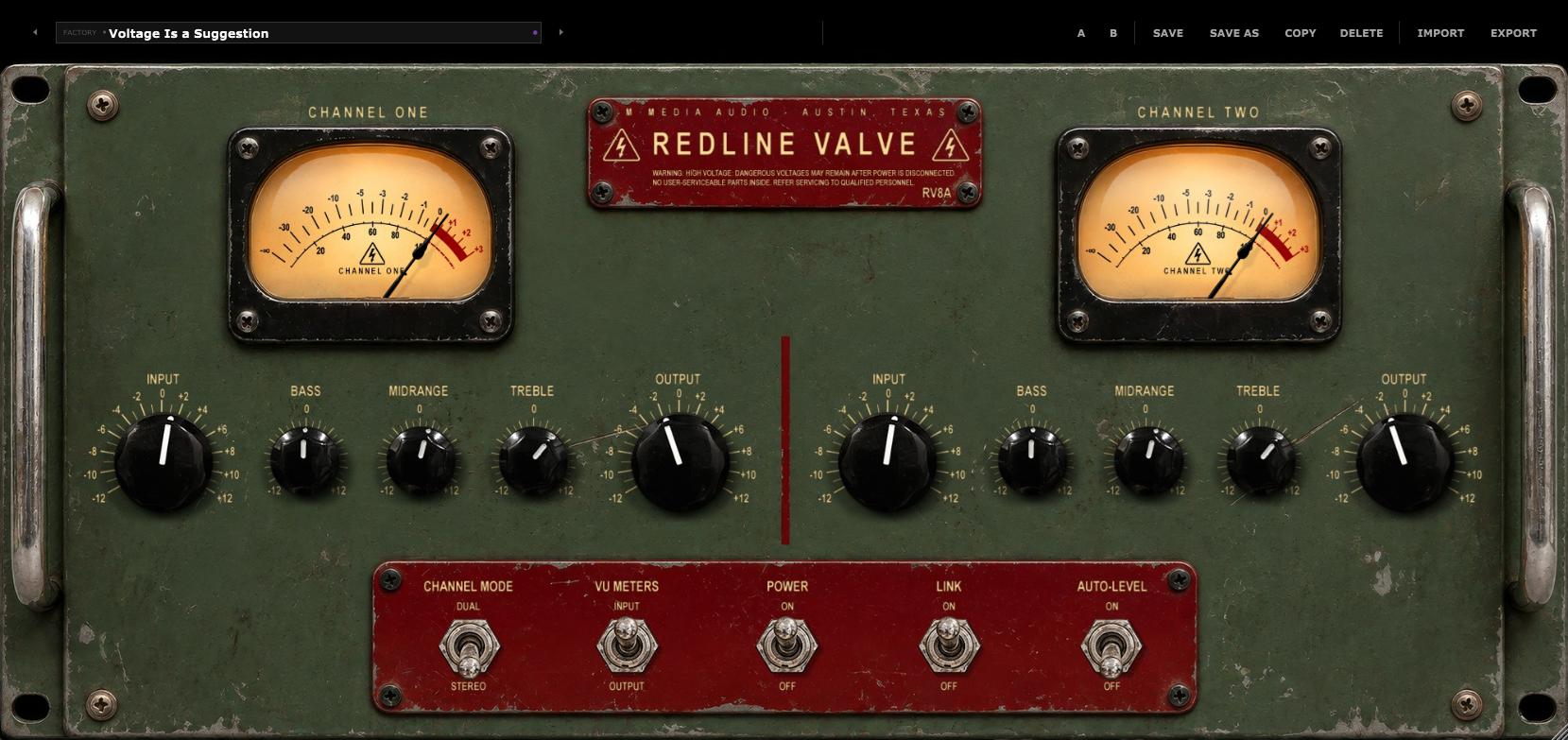
Redline Valve is a dual-channel tube-preamp plugin with Input, Output and continuous Bass, Midrange and Treble controls. Its character builds as you push Input, giving you a direct way to explore the boundary between welcome density and too much.
Drive and Level Have Different Responsibilities
Input determines how hard the signal enters the character stages. Output sets the returning level. Increasing Input and reducing Output can leave the apparent volume similar while changing the sound substantially.
That is the comparison worth making. If the driven version wins only while it is louder, you have learned more about your hearing than the preamp.
Engage Auto-Level as a first aid to fair comparison. Use the VU Source switch to inspect Input or Output, and remember that a VU meter represents average behaviour rather than a complete picture of peak headroom.
Listen for the Moment the Source Changes Size
On a vocal, raise Input across a phrase with both quiet details and strong notes. At a promising setting, the voice may acquire body and a more confident front. Past that point, consonants can turn coarse and the individuality of the delivery can become less clear.
On bass, listen to the relationship between the fundamental and its harmonics. Extra harmonic content can help notes speak on smaller playback systems. Too much can make the line feel busy while weakening its deep, stable foundation.
On drums, check the initial hit and the tail separately. Added density can be exciting until the snare’s attack and room seem to occupy the same plane.
Tone Controls Cannot Undo Every Drive Decision
Redline Valve’s three tone controls let you shape the result more precisely than a bass-and-treble-only preamp. Try small changes after finding a useful Input setting.
If you keep lowering Treble to hide roughness, revisit Input first. If you keep raising Bass because the driven sound lost its authority, reduce the drive and compare again. EQ can shape generated harmonics; it cannot reconstruct the exact original waveform.
Link is useful for matched stereo settings. Separate channels allow intentional differences, but check that asymmetric drive does not pull the image away from where it belongs.
Judge It Where It Will Live
Return to the arrangement and lower the monitoring level. Can you still follow the performance? Does the character survive without shouting?
Save a restrained state and a driven state, then compare both at similar loudness. Redline Valve has plenty of attitude. You decide how much gets invited to the session.